 St. Columba Parish
The word "vocation" simply means "calling." Every baptised person has one: a way of life through which God asks us to love and be loved. Some are called to marriage, some to the priesthood or diaconate, some to religious life, and some to a committed single life of service. None is a consolation prize. St. Columba has given the Church three priests, two permanent deacons and four religious sisters over its seventy years, and hundreds of marriages. We pray for more of all of them.
Priesthood
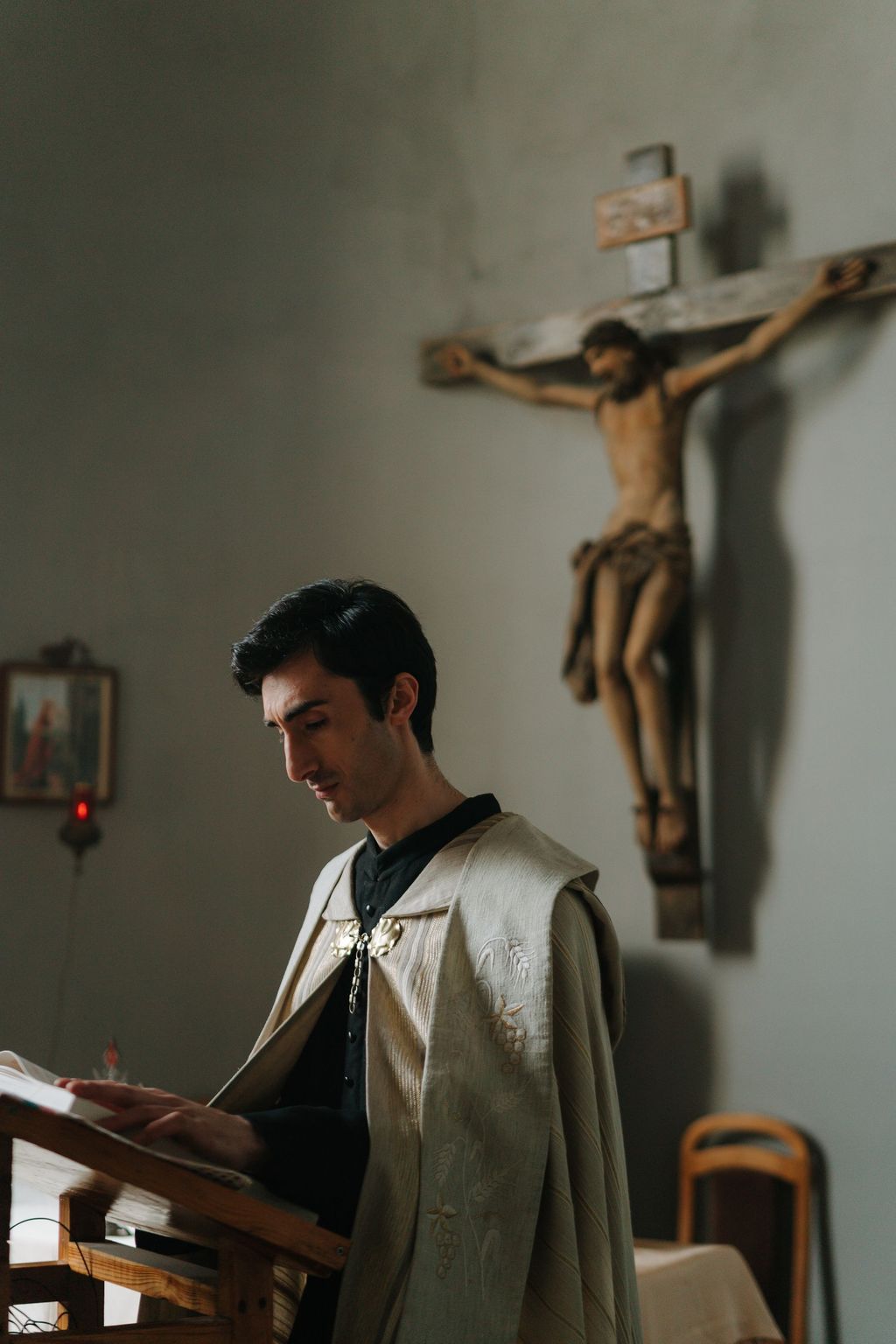
A diocesan priest serves the people of a particular diocese, usually in parishes, celebrating the sacraments, preaching, teaching and accompanying people through life's biggest moments. Priests for the Archdiocese of Toronto are formed at St. Augustine's Seminary in Scarborough. Formation takes six to eight years after high school or university, and includes philosophy, theology, pastoral placements in parishes, and a year of discernment before entering. A man may also be called to a religious order (Jesuits, Basilians, Franciscans and many others), whose priests live in community and serve according to their order's charism.
Permanent diaconate
Deacons are ordained ministers who proclaim the Gospel, preach, baptise, witness marriages, preside at funerals and lead the Church's works of charity. Most permanent deacons are married men with families and careers; our own Deacon Ferreira spent thirty years as a TTC mechanic. The Archdiocese admits men between 35 and 60, with the consent and involvement of their wives, to a four-year formation program of evening and weekend study. Deacon Ferreira is glad to talk with any man who is curious; reach him at ext. 24.
Consecrated life
Religious sisters, brothers and priests, and consecrated virgins and hermits, give their whole lives to God through vows of poverty, chastity and obedience. Some communities teach, nurse or serve the poor; others are contemplative, devoting their days to prayer. Toronto is home to dozens of communities, from the School Sisters of Notre Dame (Sr. Agnes's community) to the Sisters of Life, the Congregation of St. Basil and the Carmelites. Women and men who feel drawn to religious life usually spend a year or two visiting communities before applying.
Marriage and the single life
Most parishioners are called to marriage, in which a husband and wife become a sign of Christ's faithful love and, God willing, raise a family. Marriage is a true vocation, discerned and prepared for with as much seriousness as ordination; see Marriage and Marriage and Family. Others live a dedicated single life, sometimes by choice and sometimes by circumstance, and pour their freedom into service, work, friendship and the parish. The Church needs them, and their holiness is no less real.
Discernment
How to discern a vocation
Discernment is not a one-time decision but a habit of listening. These steps work for any vocation.
Pray every day
Ten minutes of quiet with Scripture, and Mass more than once a week if you can. Thursday morning Adoration is a good place to sit with the question.
Talk to someone
Fr. Moreau, Fr. Nguyen, Deacon Ferreira and Sr. Agnes have all walked this road. An honest conversation is the single most useful step; no one will sign you up for anything.
Get involved
Serve at the altar, join the choir, help at the food bank. Vocations grow where people are already giving themselves.
Visit
Attend a discernment evening at the seminary, a "come and see" weekend with a religious community, or an information night for the diaconate. The Office of Vocations lists them all.
Find a spiritual director
A director meets with you monthly to help you notice where God is moving. Ask our clergy for a referral.
Take the next step
Apply, get engaged, enter formation. Discernment continues inside the seminary or the novitiate, and marriage preparation is itself discernment.
Office of Vocations, Archdiocese of Toronto
The archdiocesan Office of Vocations runs discernment groups for men and women, retreats, and the annual Vocations Sunday. Its website has profiles of seminarians, a directory of religious communities and a calendar of events: vocationstoronto.ca.
Serra Club
The Serra Club is an international lay association whose members pray and work for vocations. St. Columba parishioners take part in the East Toronto Serra Club, which hosts a dinner for seminarians each Advent, sends birthday cards to every priest and religious from our area, sponsors the "31 Club" (parishioners who commit to attend Mass for vocations on one date each month), and pays for altar-server appreciation outings. Contact: Gerald Okafor, serra@stcolumbatoronto.ca.
A prayer for vocations
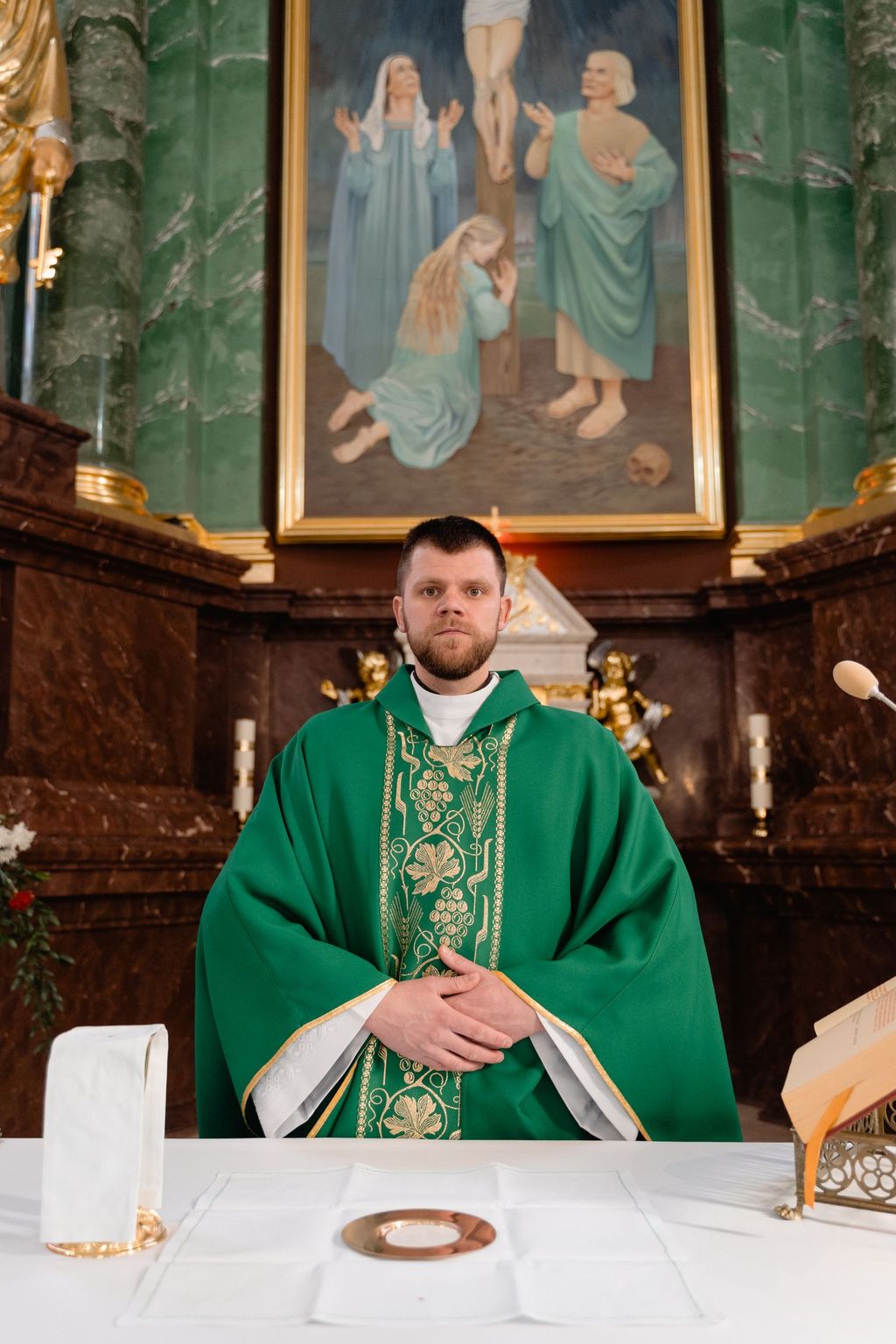
Lord Jesus, you called the apostles from their boats and their tables and made them fishers of people. Call from among our families and friends men and women who will serve you as priests, deacons and religious, and give to every one of us the courage to answer the vocation you have prepared for us. Bless our seminarians and novices, sustain our priests and religious, and make our parish a place where callings are heard. Amen.
Prayed at St. Columba on the first Thursday of each month
This prayer is offered after the 8:30 AM Mass on the first Thursday of each month, and the Legion of Mary includes vocations in its weekly intentions. Vocation prayer cards are available at the church entrance.
Frequently asked
How old do you have to be to enter the seminary?
Most men enter between 20 and 35, after at least some university. The Archdiocese also welcomes older candidates with life experience, case by case.
Can a married man become a priest?
In the Latin Church, priests are ordinarily celibate. A married man may be ordained a permanent deacon.
What if I discern and decide it is not for me?
That is a successful discernment. Many men and women spend time in formation and leave with a clearer sense of God's call to marriage or another path, and the Church is grateful for their honesty.
Questions? Speak to any of our clergy after Mass, or contact the parish office at 416-555-0142 ext. 20 to arrange a conversation.