 St. Columba Parish
In the weeks after a funeral, people rally. In the months after, the house goes quiet. Our bereavement ministry — twelve trained volunteers, most of whom have walked this road themselves — is there for the quiet months. Everything below is free and open to anyone, parishioner or not, whether or not the funeral was here.
Grief support group
Eight Tuesday evenings, 7:00–8:30 PM, twice a year (starting the last week of September and the first week of March). Eight to twelve people, two facilitators, a simple structure: a theme each week — shock, anger, guilt, loneliness, faith, the "firsts", hope — and time to talk or just listen. Confidential. Most people join three to twelve months after a death.
Bereavement companions
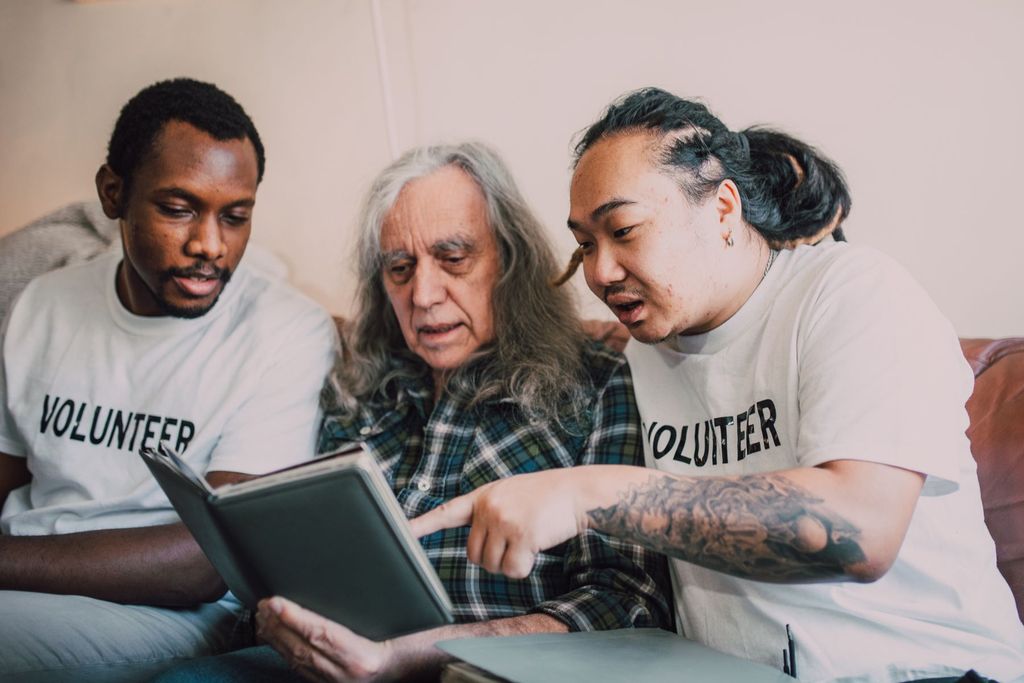
A trained volunteer who visits or phones weekly for as long as it helps — often a year. Companions are matched thoughtfully (a widow with a widow, a bereaved parent with a bereaved parent) and are not counsellors; they are people who will let you tell the story again.
Remembering
The All Souls' Day Mass on November 2 at 7:00 PM, when every family we have buried in the past year is invited by name and a candle is lit for each; the parish Book of the Dead in the narthex; anniversary Mass intentions; and a Blue Christmas prayer service in mid-December for those for whom the season is hard.
What grief is like
It is not a set of stages you pass through in order. It is more like weather: some days clear, some days you cannot get out of bed, and no way to predict which. Faith does not remove grief — Jesus wept at Lazarus's tomb — but it gives it a horizon. You are allowed to be angry with God; he can take it. You are allowed to laugh again; it is not a betrayal. You do not have to be "over it" by any date. And you do not have to do it alone.
Also here for you
- Funeral receptions in the hall, prepared by the CWL, so the family can be with their guests.
- Practical help from the St. Vincent de Paul conference if a death has left a household in difficulty.
- Prayer: the prayer chain prays for the bereaved by name; the Legion of Mary visits after a funeral.
- Children and teens: the youth minister and Sr. Agnes can meet a grieving child or refer to specialized children's grief programs in Toronto.
- Pregnancy and infant loss: a memorial Mass each October 15, and companions who have experienced this loss.
- Suicide loss: a companion trained in suicide bereavement, and a referral to a survivors' group. The Church prays for those who die by suicide with the same hope as for anyone.
If you are in crisis
If grief has become despair and you are thinking of harming yourself, call or text 9-8-8 (Canada's suicide crisis helpline, 24 hours) or go to the nearest emergency department. Then call us; we will be there.
Questions
How do I join the group?
Email or phone the coordinator; a facilitator will have a short conversation with you first so that the group is a good fit. Sessions start in late September and early March.
The death was years ago. Is it too late?
No. Grief that was never given room often surfaces years later. Come.
Can I become a companion?
Volunteers who are at least two years from their own loss complete a six-session archdiocesan training and high-risk screening, and meet monthly for supervision.
Coordinator: Patricia Nolan — bereavement@stcolumbatoronto.ca · 416-555-0142 ext. 31. Catholic Cemeteries also offers grief resources: catholic-cemeteries.ca.