 St. Columba Parish
This page is not a textbook. It is a map: the main things the Catholic Church believes, each in a paragraph, with a pointer to where the full teaching can be read. Where we say "the Church teaches," the authoritative source is the Catechism of the Catholic Church, which is free to read online.
The Creed
Every Sunday the whole congregation stands and says the Nicene Creed, a summary of the faith agreed by the bishops of the world in the fourth century. Its main affirmations are these:
- One God in three Persons, Father, Son and Holy Spirit, the Trinity, who created everything that exists.
- Jesus Christ, the Son of God, who took on human flesh through the Virgin Mary, was crucified under Pontius Pilate, died and was buried, rose on the third day, and ascended into heaven.
- The Holy Spirit, who spoke through the prophets and gives life to the Church.
- The Church, which is one, holy, catholic (meaning universal) and apostolic (founded on the apostles and led by their successors, the bishops in union with the Pope).
- One baptism for the forgiveness of sins.
- The resurrection of the dead and the life of the world to come.
The shorter Apostles' Creed, used in the Rosary and at baptisms, is on our prayers page.
The seven sacraments
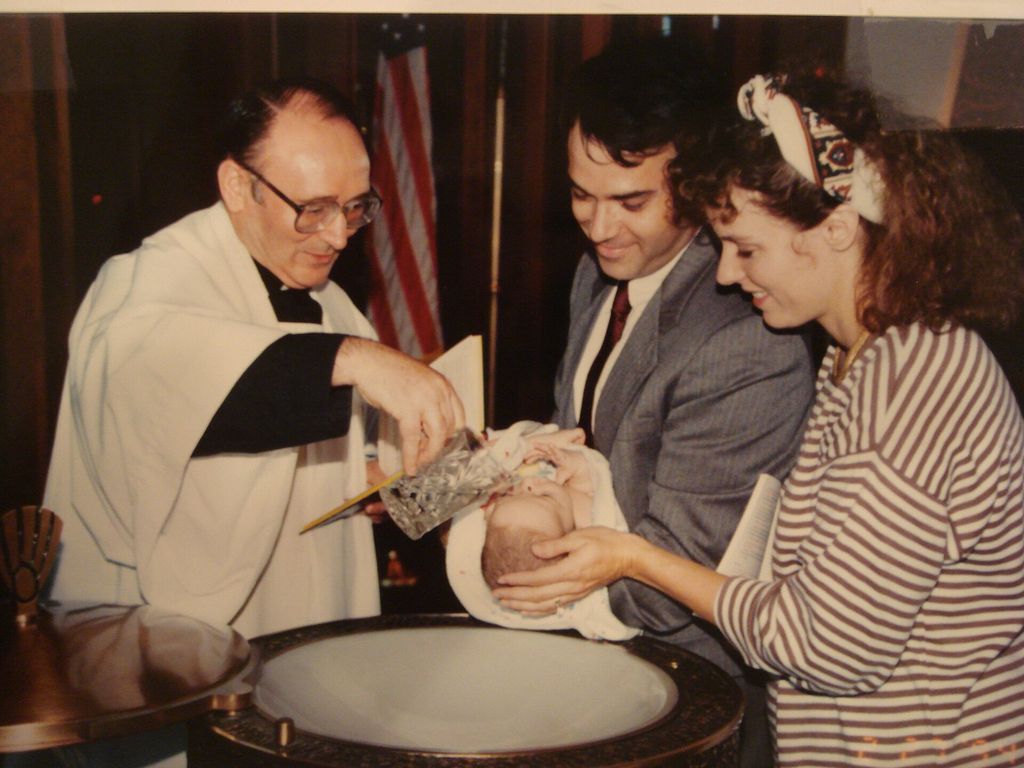
A sacrament is a visible sign, instituted by Christ, through which God gives grace. There are seven. Baptism makes us children of God and members of the Church. Confirmation strengthens us with the Holy Spirit. The Eucharist feeds us with the Body and Blood of Christ. Reconciliation (confession) forgives sins committed after baptism. Anointing of the Sick brings Christ's healing to the seriously ill. Marriage unites a man and a woman in a lifelong covenant. Holy Orders ordains deacons, priests and bishops to serve the Church.
Each sacrament, and how to receive it here, is explained on our sacraments pages.
The Mass and the Eucharist
The Mass is the centre of Catholic life. In it, the Church does what Jesus commanded at the Last Supper: takes bread and wine, gives thanks, and shares them in his memory. Catholics believe that at the words of consecration the bread and wine truly become the Body and Blood of Christ, while keeping the appearance of bread and wine; the Church's word for this is transubstantiation. That is why we kneel, why we keep the consecrated Hosts in the tabernacle with a lamp burning beside it, and why we set aside Thursday mornings for Adoration. Catholics are asked to attend Mass every Sunday and holy day. Our full schedule is on Mass times.
Mary and the saints
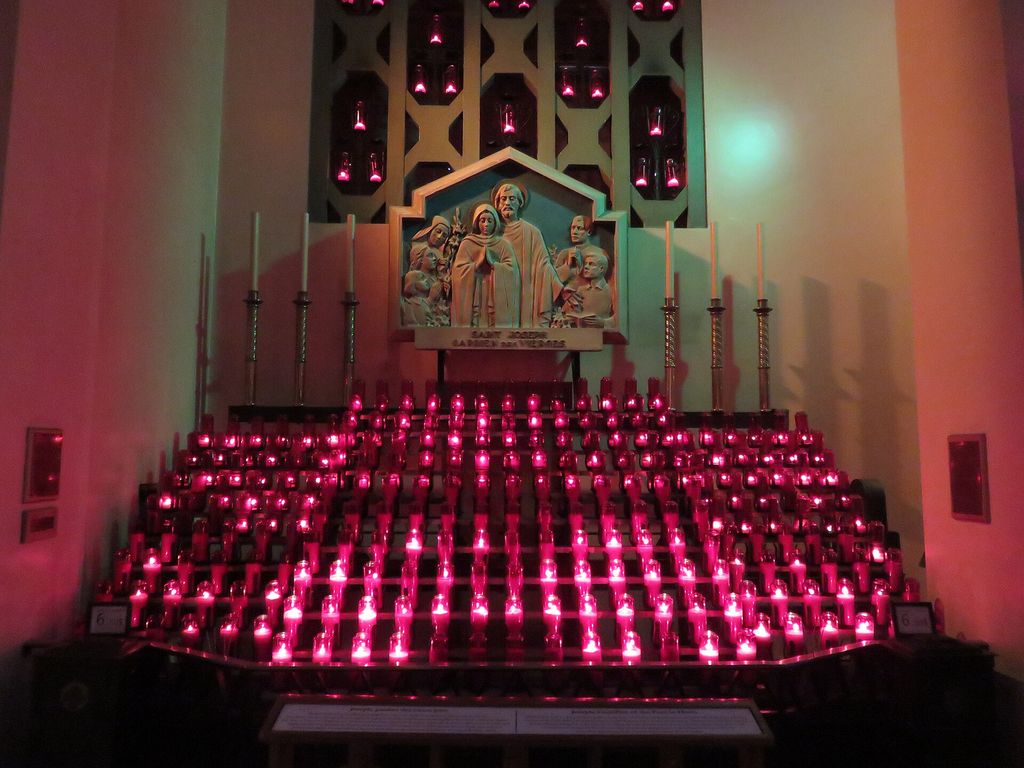
Catholics do not worship Mary or the saints; worship belongs to God alone. We honour them and ask for their prayers, as you might ask a friend to pray for you. Mary holds a unique place as the Mother of Jesus. The Church teaches that she was conceived without sin (the Immaculate Conception), remained a virgin, and at the end of her life was taken body and soul into heaven (the Assumption). The saints are men and women whom the Church has recognized as being with God, and whose lives show us that holiness is possible in every century and every walk of life. Our parish honours St. Columba, and our language communities keep the feasts of Our Lady of Fátima, San Lorenzo Ruiz and Our Lady of Guadalupe. See devotions.
Catholic social teaching
Faith that does not change how we treat other people is not the faith of the Gospel. Over the past 130 years the popes have set out principles for a just society, which the Church calls its social teaching:
- The dignity of the human person — every life is sacred, from conception to natural death, regardless of ability, status or usefulness.
- The common good — society is judged by whether it lets everyone flourish, not only the fortunate.
- Solidarity — we are one human family, responsible for one another across borders and generations.
- Subsidiarity — decisions should be made at the most local level that can make them well.
- A preferential option for the poor — the needs of the poor and vulnerable come first.
- The dignity of work — work serves people, not the other way round; workers have a right to fair wages and to organize.
- Care for creation — the earth is a gift to be stewarded, not a resource to be used up.
At St. Columba this teaching takes shape in the St. Vincent de Paul conference, our refugee sponsorship group, the annual ShareLife appeal, and the work of Development and Peace, the Canadian Church's international development agency. See outreach.
Recommended resources
Catechism of the Catholic Church
The complete, official summary of Catholic teaching: Part One for beliefs, Two for the sacraments, Three for the moral life, Four for prayer.
FORMED
Video series, audio talks, films and children's programs on the faith. St. Columba has a parish subscription, so parishioners can sign up free using the parish name and postal code.
Canadian Conference of Catholic Bishops
Statements, pastoral letters and resources from the bishops of Canada, including materials on reconciliation with Indigenous peoples and Catholic responses to public questions.
Archdiocese of Toronto
Our own diocese: news, the Cardinal's letters, Formation for Discipleship courses for adults, and directories of parishes and services.
Parishioners also recommend the books and videos of Bishop Robert Barron's Word on Fire ministry, several of which are in the parish lending library in the hall foyer.
Questions about any of this are welcome. Email Sr. Agnes Ibeh at faith@stcolumbatoronto.ca, or, if you are ready for something more structured, read about Becoming Catholic and faith formation for adults.